


Easy Skincare Routine for Sensitive Skin That Works
Having an easy skincare routine for sensitive skin sufferers sounds simple until your face turns red after trying a product that worked perfectly for everyone else online. I spent years watching my skin flush, burn, peel, and break out in response to products that were supposedly gentle, dermatologist-tested, and hypoallergenic. The frustration is real. But after stripping everything back and rebuilding carefully, I found a routine that my skin actually accepts without drama. Here's exactly what that looks like.
Why Sensitive Skin Reacts to Almost Everything
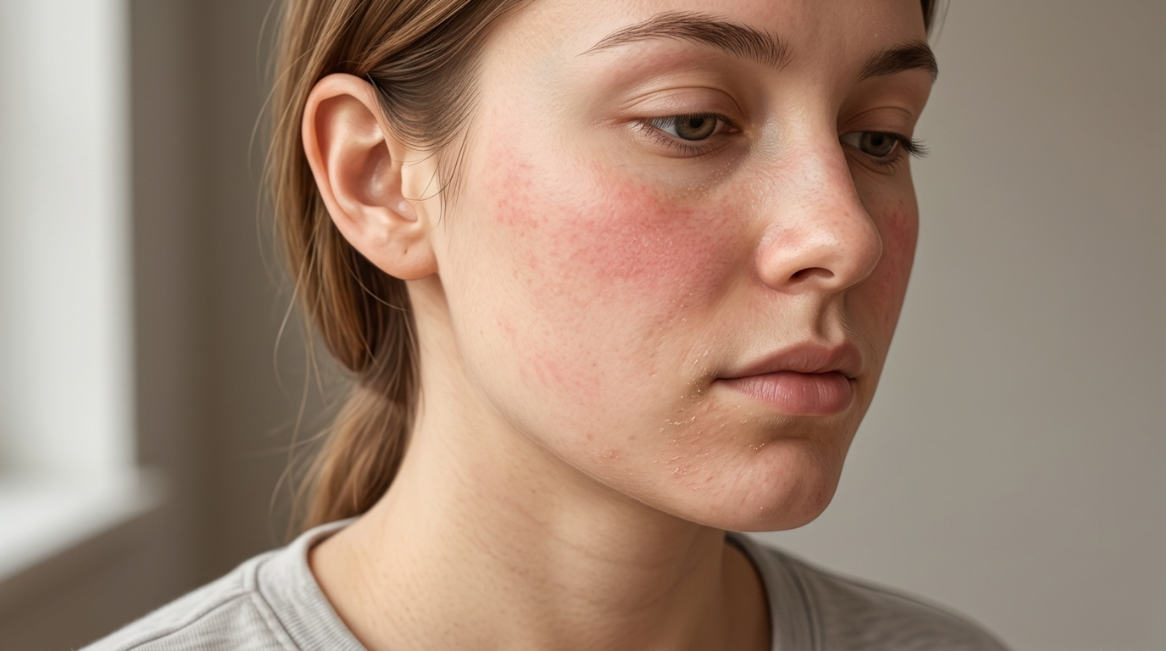
Sensitive skin isn't a personality trait or an overreaction. It's usually a sign that the skin barrier is compromised, meaning the outermost protective layer of your skin has gaps that allow irritants, allergens, and bacteria to get in more easily than they should. When that happens, your skin responds with redness, burning, stinging, or breakouts because it's genuinely trying to defend itself.
Several things can compromise the barrier over time: over-exfoliating, using products with high fragrance concentrations, switching products too frequently, environmental stressors like wind or dry air, and even certain medications. Understanding this is useful because it shifts the goal of your skincare routine from treating symptoms to protecting and rebuilding the barrier itself. Once the barrier becomes more resilient, sensitivity often decreases noticeably. Not eliminated, but genuinely more manageable. That's the whole strategy behind the routine I'm about to walk you through.
Step 1: Choose a Cleanser That Does Absolutely Nothing Exciting
The best cleanser for sensitive skin is one you never notice. No tingle, no tight feeling after rinsing, no lingering scent. Just clean skin that feels exactly like it did before you washed it, minus the dirt and oil.
Vanicream Gentle Facial Cleanser is the gold standard for genuinely reactive skin. It costs under $10, contains no fragrance, no dyes, no sulfates, and no parabens. The formula is so minimal that dermatologists regularly recommend it to patients recovering from contact dermatitis or post-procedure skin reactions. CeraVe Hydrating Facial Cleanser is another excellent choice, adding ceramides that help support the barrier during cleansing. Both rinse cleanly and leave no residue.
The most common mistake sensitive skin people make with cleansing is washing too aggressively or too often. Once in the morning and once at night is enough. Hot water increases inflammation, so rinse with lukewarm water. Pat dry gently with a clean towel instead of rubbing. These tiny adjustments matter more than most people expect.
Also Read: Budget Friendly Skincare for Minimum Wage Workers 2026Step 2: Rebuild Your Barrier With the Right Moisturizer
Right after cleansing, while your skin is still slightly damp, applying a barrier-focused moisturizer traps that moisture in before it evaporates. For sensitive skin specifically, this step is not optional. Skipping it even occasionally allows transepidermal water loss to continue unchecked, which keeps the barrier weak and keeps the reactivity cycle going.
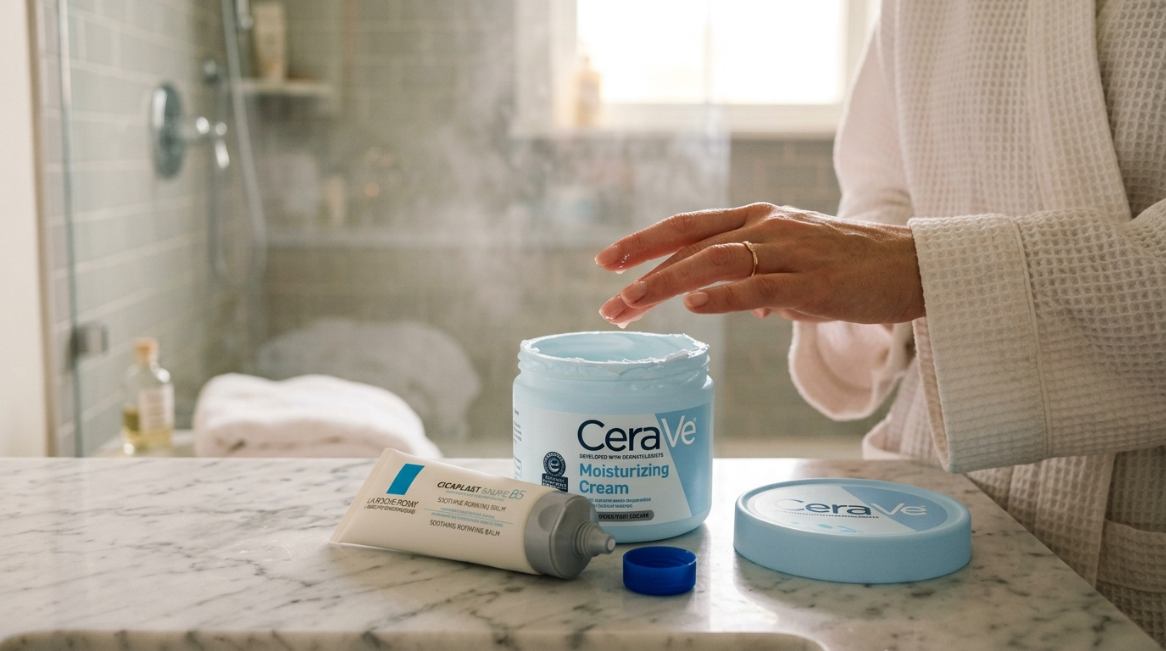
Look for moisturizers containing ceramides, fatty acids, and cholesterol. These three ingredients mirror the natural composition of a healthy skin barrier and actively help repair it over time. The CeraVe Moisturizing Cream contains all three and costs around $12 to $16 for a large tub that lasts months. It's fragrance-free, non-comedogenic, and gentle enough for use on the face and body.
For skin that runs drier and needs more intensive repair, the La Roche-Posay Cicaplast Baume B5 is an exceptional option at around $20. It was originally designed for post-procedure skin repair but works beautifully as a daily moisturizer for chronically sensitized skin. Apply a generous amount every morning and evening and resist the urge to skip it on days your skin feels fine. Consistency is what makes the barrier stronger over weeks.
Step 3: Introduce Sunscreen Without Triggering a Reaction
Sunscreen and sensitive skin have a complicated history. Chemical sunscreens, which use ingredients like oxybenzone or avobenzone to absorb UV rays, frequently cause stinging, flushing, or breakouts in reactive skin types. Mineral sunscreens, which use zinc oxide or titanium dioxide to physically block UV rays, sit on top of the skin instead of absorbing into it and cause far fewer reactions.
The La Roche-Posay Anthelios Mineral Ultra-Light Fluid SPF 50 is one of the best mineral sunscreens available for sensitive skin. It applies smoothly, absorbs reasonably fast for a mineral formula, and leaves a minimal white cast compared to many alternatives. For darker skin tones, the Black Girl Sunscreen SPF 30 is a mineral-blended option that disappears into the skin without graying.
Apply sunscreen every single morning as the last step before leaving the house. Reapply after two hours of outdoor exposure. This is the one step in an easy skincare routine for sensitive skin sufferers that protects everything else you're doing from being undone by UV damage. Without it, redness, post-inflammatory marks, and uneven tone persist no matter how good the rest of your routine is.
Step 4: Add One Treatment, Slowly and Carefully
Many people with sensitive skin avoid treatment products entirely because past experiences have been painful. That's understandable, but avoiding actives altogether means missing out on ingredients that can genuinely improve the skin over time. The key is choosing the right one and introducing it at the right pace.
Niacinamide is the most universally tolerated active ingredient for sensitive skin. It reduces redness, strengthens the barrier, fades post-inflammatory marks, and regulates oil production, all without the irritation that ingredients like retinol or AHAs can cause. The Naturium Niacinamide Serum 12% + Zinc 2% costs around $20 and is well-formulated for reactive skin. The Ordinary's Niacinamide 10% + Zinc 1% at $6 is a reliable budget alternative.
Start using it every other night rather than daily for the first two weeks. If your skin tolerates it without any reaction, move to nightly use. If it causes any stinging or redness, dilute it by applying your moisturizer first and then the serum on top. That "buffering" technique significantly reduces how much active ingredient contacts the skin directly and often makes the difference between tolerating a product and reacting to it.
When to Try Retinol on Sensitive Skin
FYI, retinol is possible for sensitive skin, but it requires a slower, more cautious approach than niacinamide. Start with the lowest available concentration, around 0.025%, and use it once a week at most for the first month. Always apply moisturizer before and after to buffer the formula. The Paula's Choice 0.3% Retinol Serum is a gentle entry point that many sensitive skin users tolerate well when introduced gradually.
Step 5: Patch Test Everything Before It Touches Your Face
Every single new product needs a patch test before full application. This sounds tedious and most people skip it, including me, until I spent two weeks with a burning rash across my cheeks from a serum I applied directly without testing. The patch test takes ten seconds and saves days of recovery.
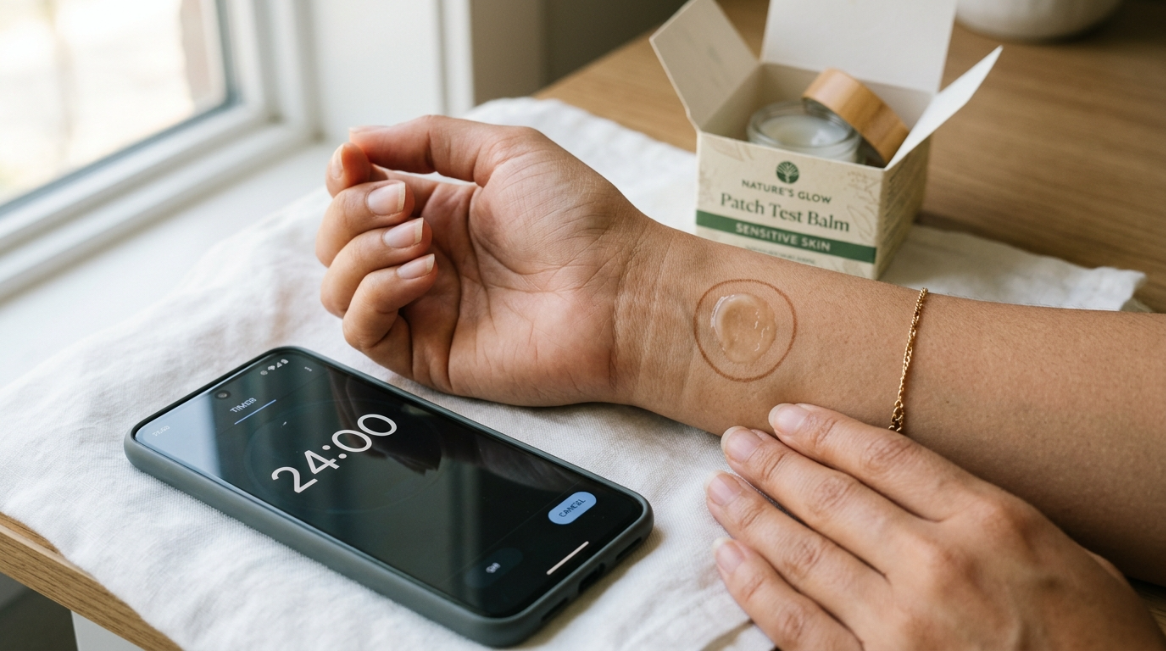
Apply a small amount of the new product to the inside of your wrist or behind your ear. Leave it for 24 hours without washing the area. If you see redness, feel itching, or notice any bumps, that product isn't safe for your skin. If nothing happens, apply it to a small section of your jawline for another 24 hours before using it on your full face. This two-stage approach catches reactions that wrist skin misses, since facial skin is thinner and more reactive.
Also, introduce only one new product every two weeks. Stacking multiple new additions at once makes it impossible to identify what caused a reaction if one appears. IMO, the two-week rule feels annoyingly slow until you remember what it's like to have your whole face burning and no idea which of the four new products you tried last Tuesday is responsible.
The Full Routine, Morning and Night
Putting all of these steps together into a real daily routine makes the whole approach practical rather than theoretical. Here's exactly how it maps out:
Morning:
- Vanicream or CeraVe Hydrating Cleanser
- CeraVe Moisturizing Cream or La Roche-Posay Cicaplast Baume B5
- La Roche-Posay Anthelios Mineral SPF 50
Evening:
- Same cleanser
- Niacinamide serum on alternating nights until well tolerated, then nightly
- Same moisturizer
That's the whole thing. Three products in the morning, three at night. Total time runs about three minutes each session. An easy skincare routine for sensitive skin sufferers works precisely because it removes the variables, the layering, the experimenting, the unnecessary products that give reactive skin more opportunities to react. Simplicity isn't a limitation here. It's genuinely the whole point.
The Ingredients That Sensitive Skin Needs to Avoid
Knowing what to skip matters just as much as knowing what to use. Certain ingredients cause disproportionate reactions in sensitive skin regardless of concentration, and they appear in products far more often than they should.
Avoid these consistently:
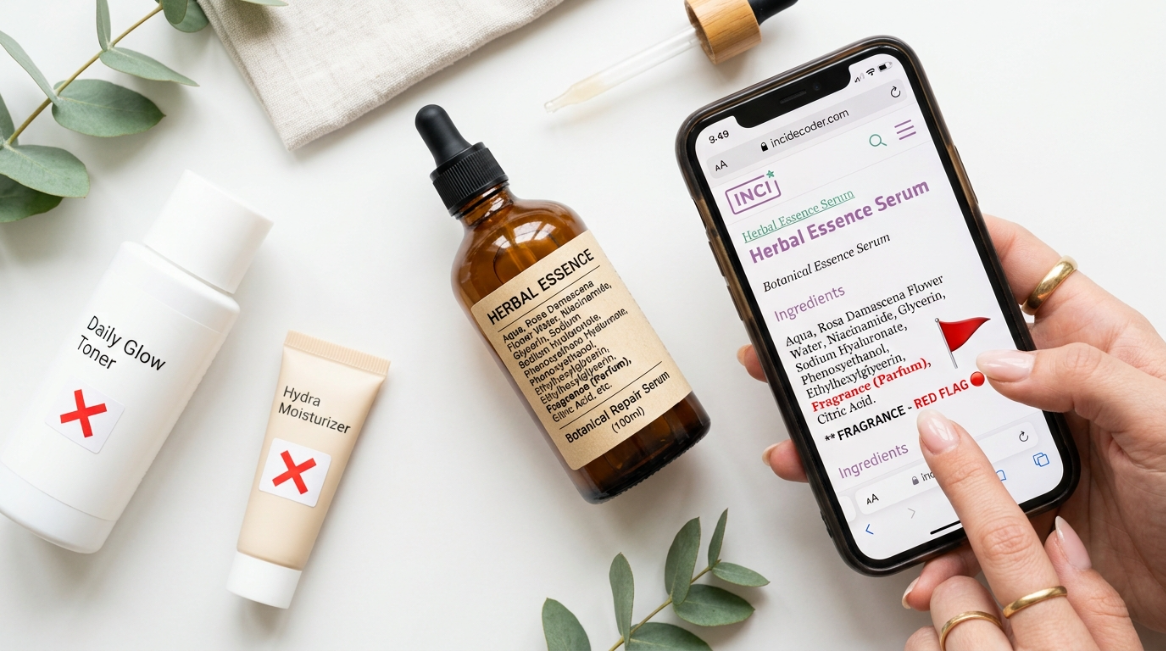
- Fragrance and parfum listed anywhere in the ingredient list
- Alcohol denat. in the first half of the ingredient list
- Essential oils, including lavender, tea tree, and citrus oils, which are common sensitizers
- Sodium lauryl sulfate in cleansers
- High-concentration AHAs like glycolic acid or lactic acid until your barrier is significantly stronger
- Menthol and camphor, which create a cooling sensation that many people mistake for soothing but actually causes inflammation
Reading ingredient labels before buying anything becomes second nature after a while. The Think Dirty app and the INCIDecoder website both let you search any product and flag problematic ingredients instantly. They've saved me from buying genuinely terrible products more times than I can count.
FAQs
What does an easy skincare routine for sensitive skin sufferers actually look like day to day?
Three products morning and night: a gentle fragrance-free cleanser, a ceramide-based moisturizer, and mineral SPF in the morning. That's the reliable baseline. Once the barrier stabilizes after four to six weeks, you can carefully introduce one treatment product like niacinamide. Keep it simple and consistent rather than ambitious and unpredictable.
Why does my sensitive skin react even to products labeled hypoallergenic?
Hypoallergenic has no regulated legal definition, which means brands can use it freely regardless of what's in the formula. Products labeled this way still commonly contain fragrance, essential oils, and preservatives that trigger reactions in sensitized skin. Always read the full ingredient list rather than relying on marketing language on the front of the packaging.
How long does it take for sensitive skin to calm down after a reaction?
Minor reactions like redness and mild irritation typically settle within two to five days when you strip back to a basic cleanser and moisturizer only. More significant reactions involving peeling or prolonged burning can take two to three weeks to fully resolve. Resist the urge to try new products during recovery, as the barrier is even more vulnerable than usual during that window.
Can sensitive skin become less sensitive over time?
Yes, genuinely. When you consistently protect and repair the skin barrier through gentle products, appropriate hydration, and daily SPF, the barrier becomes more resilient. Many people find that skin which once reacted to almost everything eventually tolerates a wider range of products after six to twelve months of a consistent, low-irritation routine.
Is mineral sunscreen really better than chemical sunscreen for sensitive skin?
For most sensitive skin types, mineral sunscreens cause significantly fewer reactions because the active ingredients sit on the surface rather than absorbing into the skin. Chemical filters like oxybenzone and avobenzone are common triggers for stinging, flushing, and contact dermatitis in reactive skin. Mineral formulas are the safer first choice, though individual responses vary.
Conclusion
Sensitive skin responds best to patience, simplicity, and products that respect the barrier rather than challenge it. Once you stop treating your skin like a problem to solve aggressively and start treating it like something that needs consistent, low-drama support, it genuinely improves. What's the one ingredient your skin has always reacted to that you're finally ready to cut out for good?