

Simple Skincare Routine for Acne Prone Teens
A simple skincare routine for acne prone teens is genuinely one of the most searched things on the internet, and yet most of the advice out there involves 10-step routines, $80 serums, and ingredients that sound like they belong in a chemistry exam. I had terrible acne at 16 and made every mistake possible before figuring out what actually worked. Spoiler: it was three products and a lot of consistency, not a drawer full of stuff I used twice.
Why Teen Acne Happens and Why Most Products Make It Worse
Teenage acne comes down to hormones, and hormones are relentless. During puberty, androgen levels rise sharply, which signals the skin's oil glands to produce significantly more sebum. That excess oil mixes with dead skin cells and clogs pores, creating the environment where acne-causing bacteria thrive.
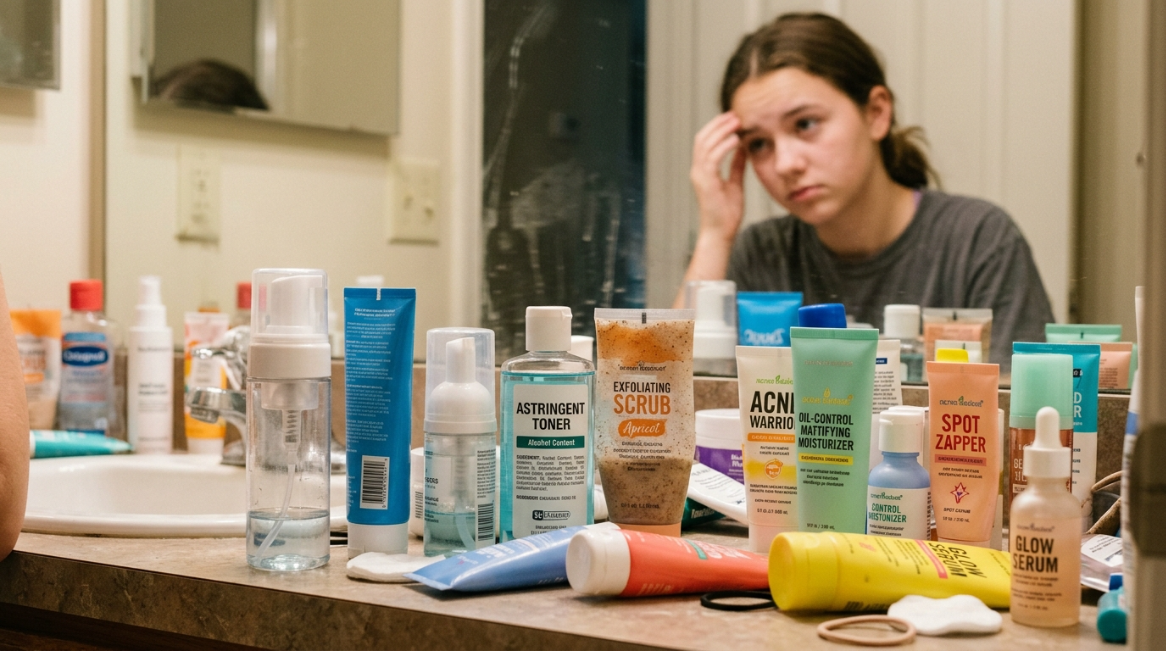
The frustrating part is that most products marketed to teens make this worse, not better. Harsh scrubs strip the skin raw, which triggers even more oil production as a defensive response. Alcohol-heavy toners leave skin dehydrated, which causes the same problem. Fragranced cleansers cause inflammation on top of existing breakouts. The skin barrier gets repeatedly damaged, and the cycle continues no matter how many products you throw at it.
The solution isn't more products or stronger ingredients. It's the right ingredients, used the right way, consistently enough to actually work. Acne doesn't disappear in a week regardless of what any product claims. Realistic timelines run four to eight weeks of daily use before a full picture of whether something is working becomes clear.
Step 1: Wash Your Face the Right Way With the Right Cleanser
Most teens wash their faces too aggressively. They scrub hard, use hot water, and reach for the most foaming, tingly cleanser they can find because it feels like it's doing something. It is doing something: it's stripping the barrier and making breakouts worse.
A gentle, non-stripping cleanser used twice a day, morning and night, is all the cleansing your skin needs. The CeraVe Foaming Facial Cleanser sits around $14 and works well for oily and combination skin because it removes excess oil without leaving skin feeling tight or raw. For skin that tends to swing between oily and sensitive, the Cetaphil Gentle Skin Cleanser at around $10 is even more neutral and causes almost no reactions.
Wash with lukewarm water. Use your fingertips, not a rough cloth or brush. Spend about 30 to 60 seconds working the cleanser around your face, then rinse thoroughly. Pat dry with a clean towel. Hot water feels satisfying but dilates blood vessels and increases inflammation, which is the last thing acne-prone skin needs.
Also Read: Easy Skincare Routine for Sensitive Skin That Works 2026Step 2: Use a Targeted Acne Treatment, Not a Toner
Many teens skip straight from cleanser to moisturizer and leave out the most important step: an actual acne-fighting treatment. This is the product doing the real work, and for teen acne specifically, two ingredients outperform everything else available without a prescription.
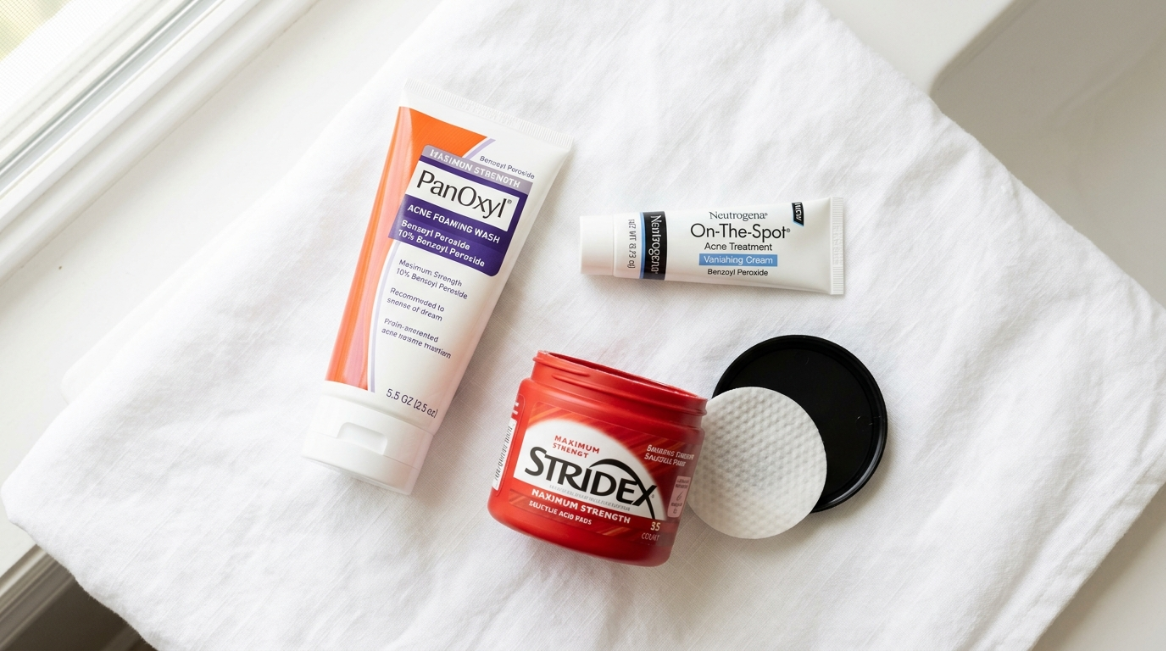
Benzoyl peroxide kills acne-causing bacteria directly and works faster than most other options. The PanOxyl Acne Foaming Wash 4% Benzoyl Peroxide costs about $11 and works as both a cleanser and a treatment in one step, which simplifies the routine considerably. If you prefer a separate leave-on treatment, the Neutrogena On-The-Spot Acne Treatment with 2.5% benzoyl peroxide applies directly to active breakouts and costs under $10.
Salicylic acid is the second heavy hitter. It's a beta-hydroxy acid that dissolves the oil and dead skin cell buildup inside pores rather than just cleaning the surface. The Paula's Choice 2% BHA Liquid Exfoliant is the most well-formulated salicylic acid product available, at around $35. For a budget option, the Stridex Maximum Strength pads at around $7 deliver 2% salicylic acid in a convenient pad format that makes the step hard to skip.
A common mistake: using both benzoyl peroxide and salicylic acid at the same time in the same routine. Start with one. See how your skin responds for four to six weeks. If results feel incomplete, consider alternating them on different nights rather than layering them simultaneously.
Step 3: Never Skip Moisturizer, Even With Oily Skin
This is the step that teens, especially teens with oily skin, consistently skip. The logic seems reasonable: if your skin already produces excess oil, adding more moisture seems counterproductive. That logic is exactly backwards.
When skin loses moisture, it compensates by producing more oil. Skipping moisturizer keeps that cycle going. Using a lightweight, oil-free moisturizer breaks it. The goal isn't to add oil to oily skin. It's to provide water-based hydration so the skin stops overproducing sebum as a self-defense mechanism.
The Neutrogena Hydro Boost Water Gel at around $20 is one of the best options for acne-prone teen skin because it's lightweight, absorbs quickly, and contains hyaluronic acid that hydrates without clogging pores. The CeraVe PM Facial Moisturizing Lotion at around $16 is another reliable option, adding ceramides and niacinamide that help calm post-acne redness over time.
Apply moisturizer right after your treatment product, while skin is still slightly damp. Use a small amount, about the size of a pea for the whole face. More than that and oily skin types will feel greasy within an hour.
Step 4: Add Sunscreen to Your Morning Routine
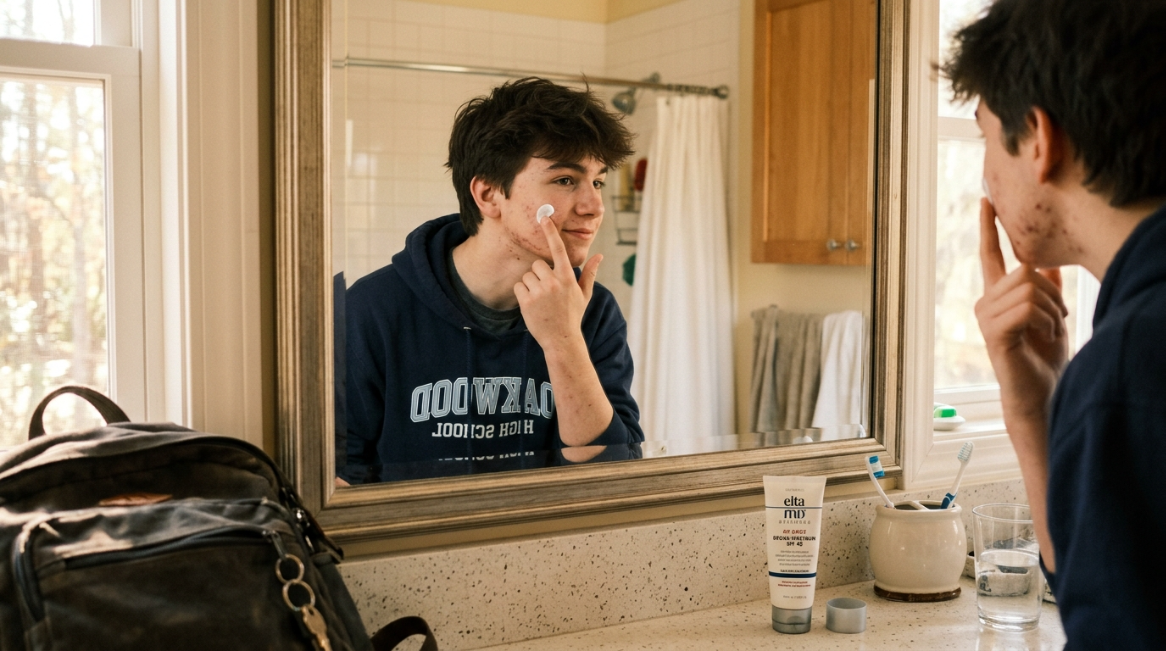
FYI, sunscreen isn't just for beach days. UV exposure makes acne scars and post-inflammatory marks significantly darker and more persistent. If you've ever wondered why a pimple leaves a pink or brown mark that sticks around for months, unprotected sun exposure after a breakout is usually the main reason.
For acne-prone skin, mineral sunscreens containing zinc oxide are a particularly good choice because zinc has mild anti-inflammatory and antibacterial properties that can actually support clearer skin while providing UV protection. The EltaMD UV Clear SPF 46 at around $40 is the gold standard for acne-prone skin and contains niacinamide on top of zinc. For a more accessible price, the La Roche-Posay Anthelios Clear Skin SPF 60 at around $20 is a strong drugstore alternative with a matte finish that doesn't amplify shine.
Apply it every morning as the final step, after moisturizer. A pea-sized amount covers the whole face. Yes, even on cloudy days. Yes, even when you're mostly indoors. Windows don't fully block UVA rays, which are the ones responsible for darkening post-acne marks.
Step 5: Stop Doing the Things That Make It Worse
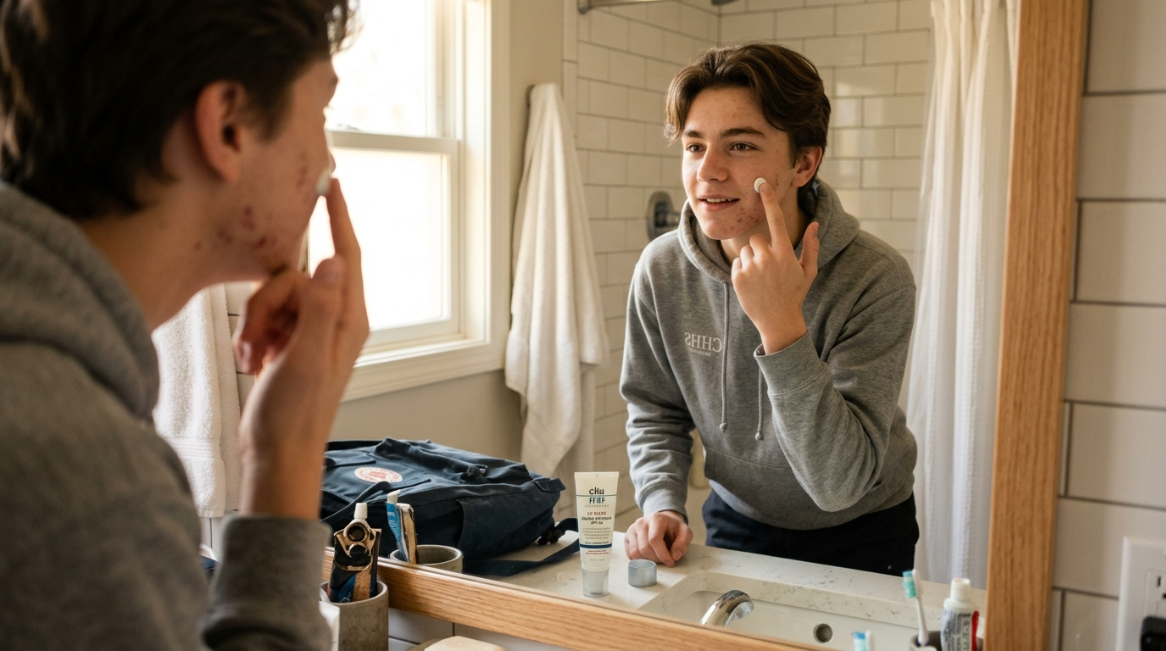
Building a good routine matters, but so does stopping the habits that undermine it daily. Teens with acne often do several things consistently that cancel out everything the routine is trying to accomplish.
The biggest offenders:
- Touching your face constantly throughout the day, transferring bacteria from hands to skin
- Popping and picking pimples, which pushes bacteria deeper, causes scarring, and extends healing time dramatically
- Using dirty pillowcases, which accumulate oil, bacteria, and dead skin cells and press them against your face for eight hours every night
- Over-washing, thinking more cleansing means fewer breakouts, when it actually means more oil production
- Changing products every two weeks because results aren't instant, which prevents anything from working long enough to show results
Change your pillowcase at minimum once a week. Keep your hands away from your face during class, gaming, studying, wherever your hands tend to drift. And if you pick at your skin, get a pimple patch instead. Mighty Patch Original Hydrocolloid patches from Hero Cosmetics cost about $13 for 36 patches and physically prevent touching while actively drawing out pus overnight. They work better than picking and leave zero scarring.
The Full Routine in Real Time
Turning all of these steps into a routine that fits into an actual teen's morning and evening schedule requires keeping it short enough to stay consistent. Here's what the full routine looks like laid out simply:
Morning:
- CeraVe Foaming Cleanser or Cetaphil Gentle Cleanser
- Salicylic acid or benzoyl peroxide treatment on active breakouts
- Neutrogena Hydro Boost Gel or CeraVe PM Lotion
- EltaMD UV Clear SPF 46 or La Roche-Posay Anthelios SPF 60
Evening:
- Same cleanser
- Same acne treatment applied to full face or spot treated depending on severity
- Same moisturizer
Total time: under five minutes morning, under three minutes at night. A simple skincare routine for acne prone teens works when it stays simple enough to actually do every day, including school nights, late nights, and the mornings when everything feels like too much effort.
FAQs
How long does a simple skincare routine for acne prone teens take to show results?
Realistically, four to six weeks of consistent daily use before noticeable improvement appears. Acne products work by regulating the skin environment over time, not by clearing breakouts overnight. Switching products before giving them enough time is one of the most common reasons routines fail for teens.
Should teens use toner as part of their acne routine?
Traditional astringent toners do more harm than good for acne-prone skin because they strip moisture and disrupt the skin barrier. If anything, a hydrating toner containing niacinamide or hyaluronic acid can support the routine without causing damage. But toner is not a necessary step, and leaving it out won't hurt results.
Is benzoyl peroxide or salicylic acid better for teen acne?
Both work well but in different ways. Benzoyl peroxide kills bacteria and works faster on active inflamed pimples. Salicylic acid clears inside pores and works better for blackheads, whiteheads, and preventing new breakouts. IMO, teens with mostly inflamed red pimples should start with benzoyl peroxide. Teens with mostly clogged pores and blackheads should start with salicylic acid.
Can teens use retinol for acne?
Retinol can help with acne and post-acne marks, but it causes significant irritation when introduced too quickly, especially on skin that's already inflamed. A better starting point for teens is consistent use of salicylic acid and niacinamide. If those aren't enough after three months, Differin Adapalene Gel 0.1% is a gentler retinoid available over the counter and worth trying next.
Why does skin sometimes get worse after starting a new acne routine?
An initial purge is common, especially with salicylic acid, benzoyl peroxide, and adapalene. These ingredients speed up cell turnover and bring congestion to the surface faster than it would appear naturally, which can temporarily look like more breakouts. A genuine purge lasts four to six weeks maximum. If skin is getting significantly worse beyond that point, the product likely isn't a good match.
Conclusion
Clearing acne as a teen takes patience, the right three or four products, and the discipline to stop experimenting every two weeks when results feel slow. The routine above is genuinely everything most teens need, without the noise. What's the one product or habit you're going to start or stop after reading this?